Himalayas, the vast mountain range in Asia that separates the Indian subcontinent from the Tibetan Plateau. Spanning about 1,550 miles (2,500 km) across five countries, they contain Earth's highest peaks, including Mount Everest, which is one of the holiest and most adventurous destinations on the globe.
For adventure lovers there are scenic trails and equally challenging summits to scale.
The picturesque valleys, high Passes here are a part of great Himalaya and are of par in beauty and in comparison to any on earth !.
During my endeavours, during a trek the journey from point to point or campsite will be more or less rigorous carrying a hefty rucksack and gear.Though there are opportunities for bird watching @ leisure.The itineraires and time schedule with hinder our interests and in the mean while carrying tele lenses for bird watching.
During Spring In April 2026, with a group of fellow trekkers wishing to pursue the High Himalayan trail , Tashi Lapcha Pass 5755 m in Rolwaling valley with a crossover to Khumbu Valley crossing High col at 5755 m. Though the trek was a challenging schedule of 15 days and more or less a very tight schedule,
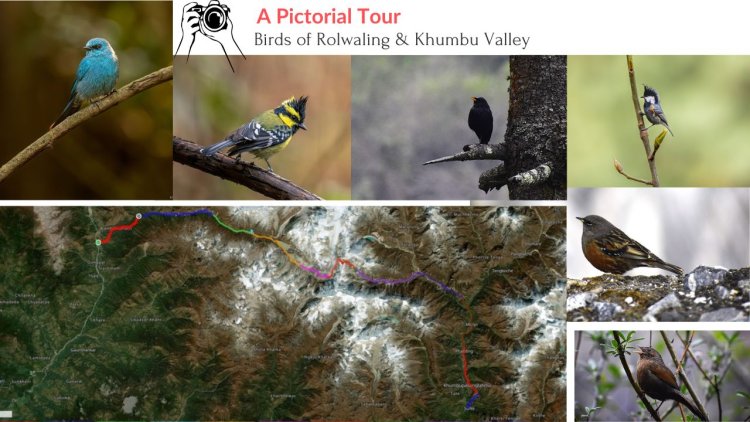
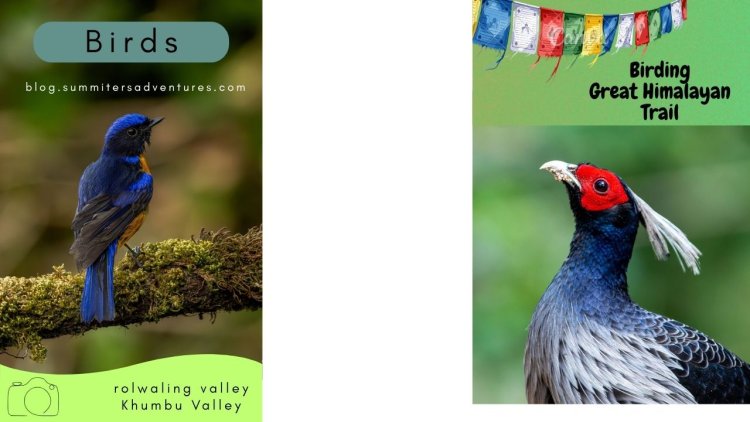
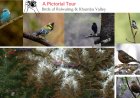
The diversity is such that I couldn't resist and managed to do a bit of BIRDING using a telephoto lens in the pristine Rolwaling Himal and from Thengba - Thame Namche Bazaar - Phadking till Lukla in busy Khumbu Valley.
I was able to record able 50 species of birds, each unique sporting a colorful plumage and call...
1. Golden Throated Barbet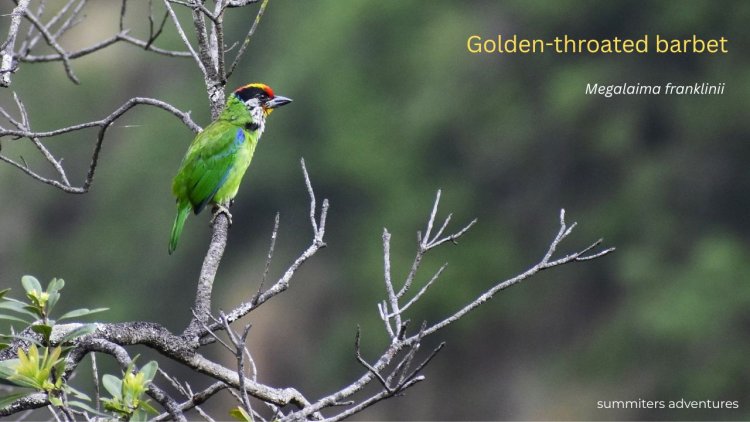
The Golden-throated Barbet's main range is mainland south-east Asia, reaching the Indian subcontinent in north-east India and in the Himalayas west to west-central Nepal. It occurs in moist broadleaf forest in the subtropical and temperate zone.
In Rolwaling Valley the Golden-throated Barbet is an abundant resident which is found in all major river valleys, and from 1000 - 2200 metres, with occasional records to 400-2800 metres. Birds vocalize mid-March-September, and occasionally in autumn and late winter. Peak calling activity in the breeding season is mid-April-July.
The bird and its call captivated me, it looked colourful during climb to Simigaon - Tashi Labsta Trek.
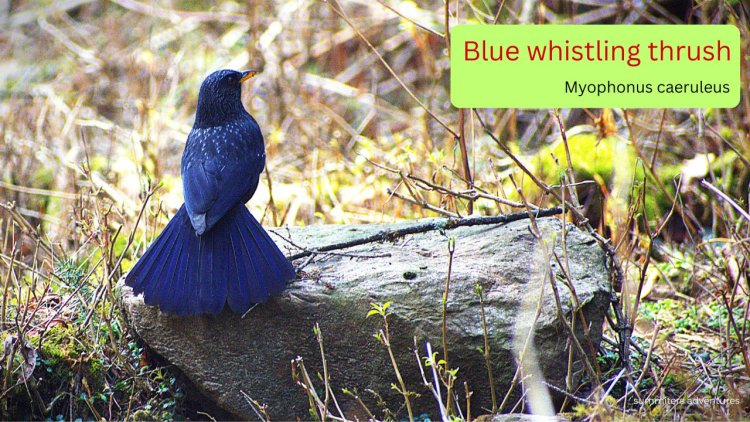
2. Blue Whisting Thrush
While hiking to Kyalche in Rolwaling Valley. This Large blue bird beckoned me and made me listen to its song. Often found along streams in forested hills and mountains. Dark purple with tiny silvery spots on head, back, and wings. Bill color varies with range: dark in central and eastern China and parts of mainland Southeast Asia, bright yellow in populations elsewhere.
Frequently fans tail while standing on an exposed perch such as a waterside rock or overhanging branch. True to its name, it does whistle: a long piercing note that carries well over the sound of rushing water.
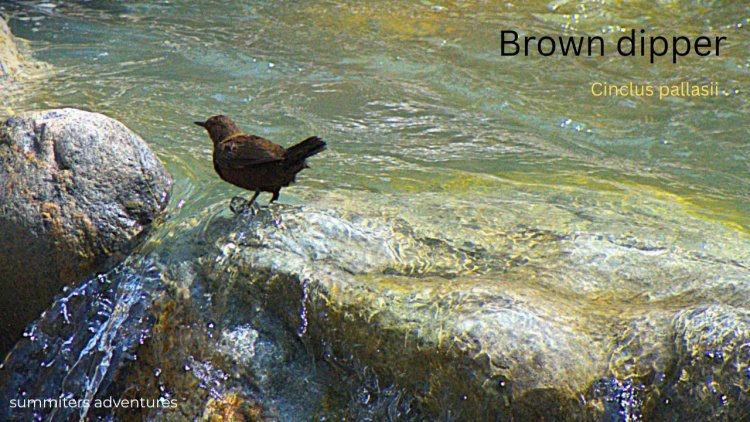
3. Brown Dipper
It is a bird that flies underwater !
It is alternatively known by the common names Pallas's dipper, Asian dipper or the Asiatic dipper, is an aquatic songbird found in the mountains of southern and central Asia)
Largest of the dippers of clear, flowing streams.. chocolate-brown, short-tailed thrush-like songbird, feeds by diving into streams.. Found in the mountains of the east Palearctic too
4. Alpine Accentor
It is a small passerine bird and is found throughout the mountains of southern temperate Europe, and Asia at heights above 2,000 m (6,600 ft). It is mainly resident, wintering more widely at lower latitudes, but some birds wander as rare vagrants as far as Great Britain.
It is a bird of bare mountain areas with some low vegetation.It is a daring bird and comes closer without any hesitation.
Stocky, stout, and unobtrusive bird of alpine regions above the treeline. Often seen shuffling around boulders in small groups. Distinctive dark wing panel bordered by pale spots forming two wingbars, particularly obvious in flight. Barred throat can be difficult to see but chestnut flanks with white streaks distinctive. Flight is strong and fast before diving behind rocks.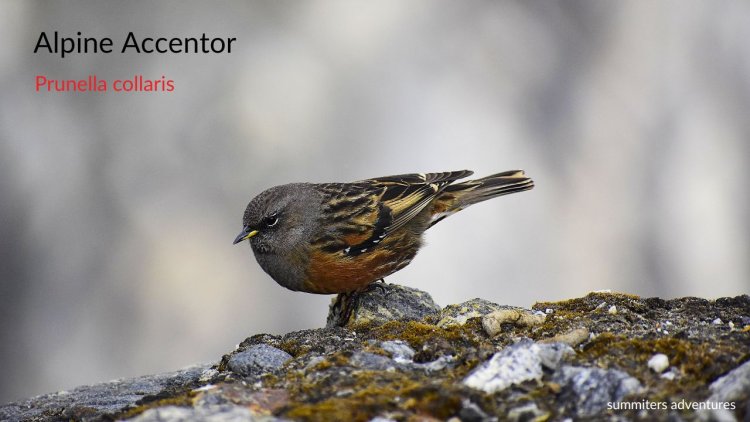
5. Black & Orange Fly Catcher
A small colorful bird endemic to western ghats,nilgiri,palani hills range. They are found in higher altitudes in these mountain ranges. A distinctly coloured bird found mainly in the high-elevation areas of the Western Ghats, the Nilgiris, the Palnis and associated hill ranges. The male is distinctly black headed with black wings. The female has the black replaced by dark brown and has a light eye-ring. They are usually seen singly or in pairs.
6. Black Lored Tit
The Himalayan black-lored tit (Machlolophus xanthogenys), also known as simply black-lored tit . Lore in the bird's common name refers to the area between eye and bill. This species is a resident breeder along the Himalayas in the Indian Subcontinent including Nepal. 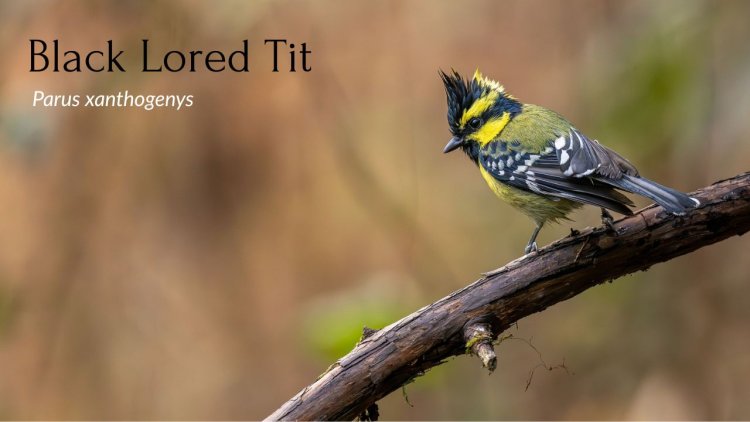
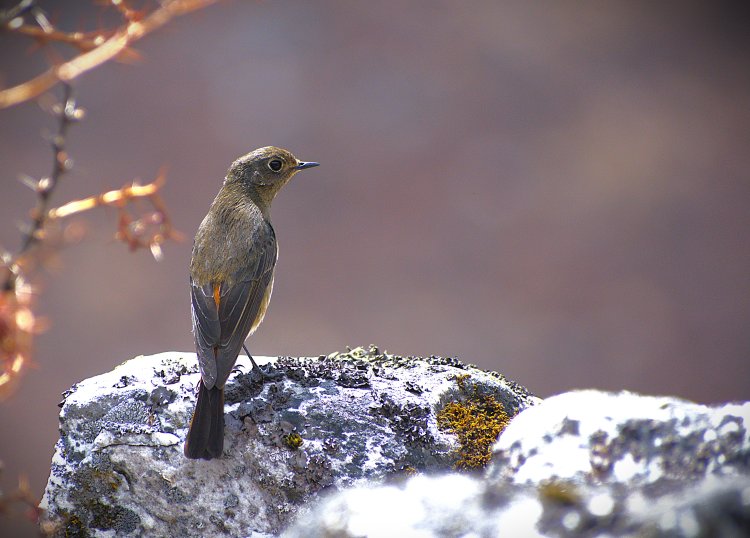
7. Blue fronted Redstart
The Striking Multi Coloured Energetic Bird - Robin sized bird that is instantly recognizable by its striking coloration and boasts a vibrant combination of bold blue plumage on its head and upper body, contrasted by a bold reddish-orange on its belly and tail. This eye-catching display not only serves as a visual feast for observers but also plays a crucial role in attracting mates during the breeding season.
The Male is unmistakable, with his orange breast, belly, and tail and ultramarine-blue head and back. Female is brown with no wingbars and an orange tail and lower belly; watch out for the unique upside-down black ‘T’ on her tail. Like many other redstarts, often perches visibly, bobbing tail up and down.
The only Redstart with inverted-T pattern on tail. Breeding male has blue head, back, wings and throat; rest of underparts, rump and relatively long tail rufous-orange, tail with black central feathers and distal third; bill and legs black.
It breeds in Central China and the Himalayas (where in winters it can be spotted in Southern foothills, as well as in Yunnan, North East India and Northern South East Asia). Its natural habitat is temperate forests. The species breeds in brushy open subalpine dwarf juniper, rhododendron, birch scrub and open grassy areas in alpine zone above tree-line, at 3000 to 5200 mtrs, although found in Afghanistan in valley-bottom hazel scrub at 2200 mtrs. subalpine areas.
In Winters they spend in foothills in scrubby areas, field edges, gardens, understorey of open forest, bushy river valleys, gorges, and in open terrain with bushes, cultivated clearings, tea gardens, terraces, pastures, scrub, thickets, etc., at 1000 to 2700 mtrs. They are altitudinal migrant and short-distance migrant.
The Blue-Fronted Redstart feeds on insects, berries, and seeds. Insects predominate May to Sept, but from Aug berries and seeds are also taken; in winter exclusively vegetable material.
The Song, sometimes in low display-flight, is a series of phrases consisting of the same basic but subtly varied arrangement, 1 to 2 harsh grating trills followed by short sweet warble.TThe Calls include repeated low thin, grating “ee-tit-tit” stutter in alarm, mournful “swee-up” in alarm near nest, and single clicking “tik”.
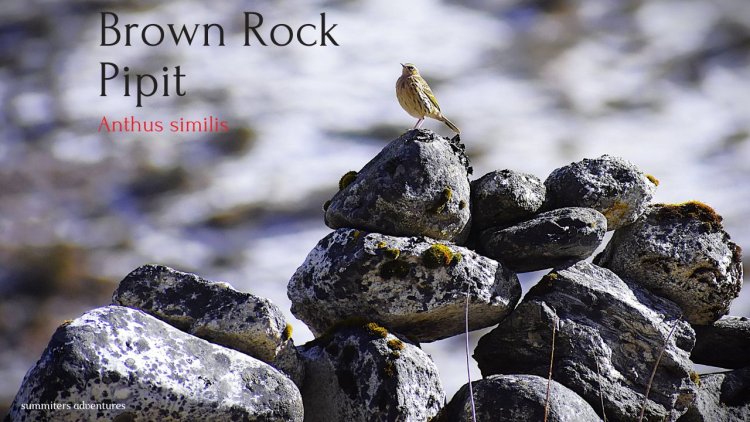
8. Brown Rock Pipit
A brownish-streaked, ground-dwelling bird found in dry, stony, or rocky open hillsides across India. It is a resident in the Western Ghats and Himalayan foothills, with some populations migrating to the northern plains in winter. It is often distinguished from the Tawny Pipit by its larger size and darker bill.
Rock pipits have dark grey upperparts with streaks on their mantles. They have dark brown wings with pale edges and dark brown tails. Their underparts are pale brown and they have a pale chin with streaks on their breasts and pale bellies.
Rock pipits have fine brown streaks on their heads and a light eyebrow with a pale broken eye-ring. They have small, pointed black bills with a yellow base in winter. Their eyes are dark brown and their legs and feet are dark reddish-brown.
Normally spotted near fields and near to scrub lands !.I was fortunate to spot them in Na Village in Rolwaling Valley
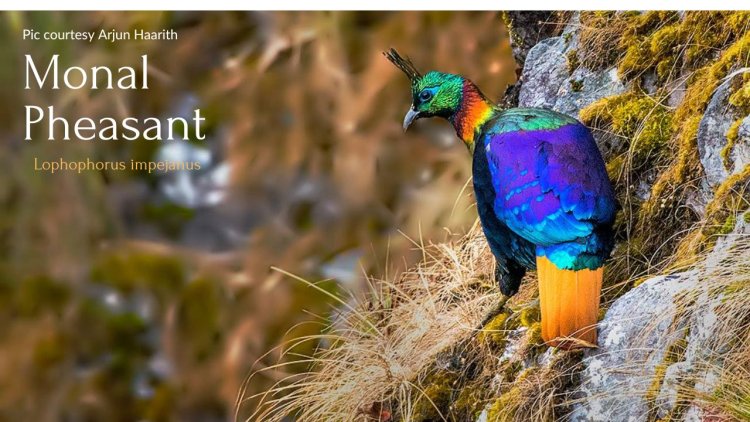
9. Monal Pheasant
A bird displaying iridescent plumage that appears blue, green, purple, gold, and orange in sunlight.
The Himalayan monal is a species of pheasant found in high-altitude forests and alpine meadows across the Himalayan region.
Its range includes Nepal, India, Bhutan, and parts of Tibet, where it inhabits mountainous terrain.
The species is Nepal’s national bird and is known for its distinctive calls and reflective feathers. It is the National Bird of Nepal and State bird of Uttarakhand in India.
I was fortunate to sight one near to Thame Khola enroute to Thame in Khumbu Valley.
10. Long tailed Minivet
The Long-tailed Minivet is a colorful Asian bird known for its long tail, with males being black and red and females gray and yellow, often found in pairs or small flocks in mid- to high-altitude forests. It belongs to the cuckoo-shrike family and is distinguished from similar species by a lumpy wing fork and a longer tail.
The Long-tailed Minivet is commonly found in forests, wooded slopes, and Himalayan foothills, where it often forages in the mid to upper canopy. Known for its active nature, this species feeds primarily on insects, making short flights from exposed perches to catch prey. The vibrant coloration, particularly in males, plays a role in visual communication and makes the species a favourite among birdwatchers.
These birds are insectivores, making short flights from perches to catch prey, and are popular with birdwatchers for their vibrant plumage.
11. Plumbeous water Redstart
It is a passerine bird in the Old World flycatcher family Muscicapidae. It is found in South Asia, Southeast Asia, Himalayas and China. Males are slate blue in colour, while females are grey. The bird's common name refers to its colour which resembles lead. They tend to live near fast-moving streams and rivers.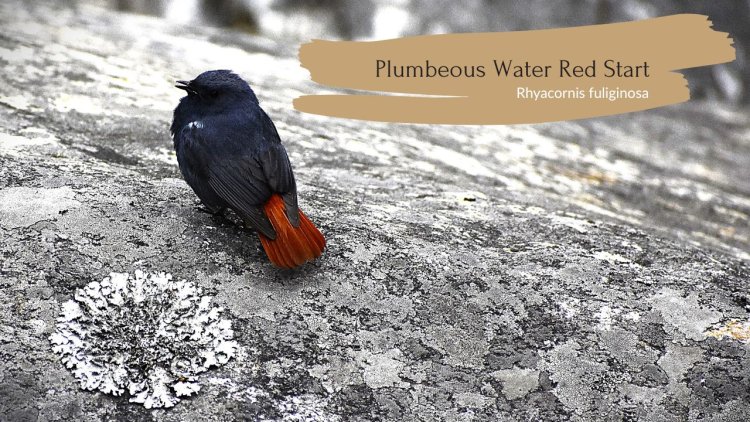
12. Rosy Pipit
This species is known for its soft pink throat and breast during the breeding season. In non-breeding plumage, they have a creamy white brow and mustache stripe with blotchy streaking on the breast. Rosy pipits are found in montane regions and descend to lower areas in winter.
They are known to give a squeaky "tseep" call and sing repetitive high-pitched songs. 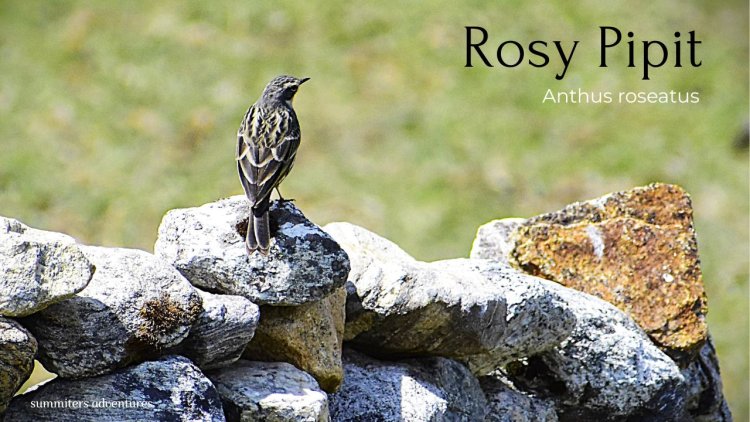
13. Grey backed Shrike
It is known as the Tiny Butcher
Elegant, bird small shrike which we saw regularly perched on exposed twigs, branche top looking around for hunt and always hungry for a meal. Gray crown and back contrast sharply with white throat, black mask and wings, and bright orange sides with a strong hooked bill.
Dwells in open scrub and farmlands mainly in the Himalayas and adjoining plains. Feeds on insects and small vertebrates. Fun fact: Impales prey on thorns like a tiny butcher.
I saw them enroute to Namche Bazaar
14. Streaked Laughing Thrush
The Himalayan species confined mid to upper elevations of the Himalayas, often seen near forest edges or even around human habitation. Its orangey-brown plumage with fine streaking offers excellent camouflage in dense shrubbery.
One of its most distinctive features is the rufous-brown ear patch that stands out against its streaked face. Despite their name, you’ll often find them skulking in low bushes or hopping on the ground rather than "laughing" in the high canopy.
Usually moves around in pairs or small flocks, foraging on the ground and calling softly. 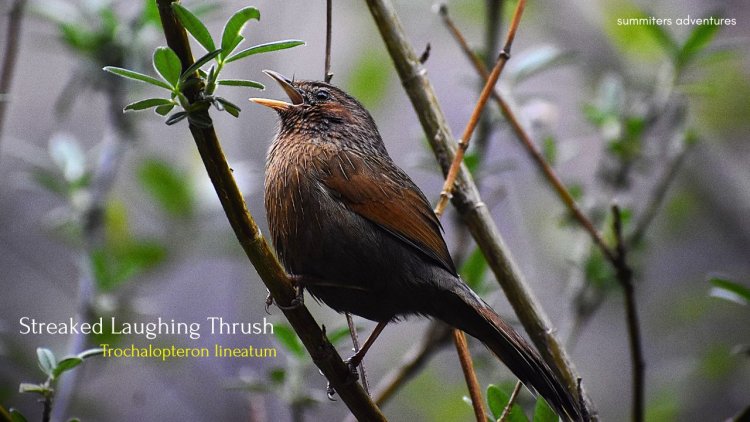
15. Rufous Gorgeted Flycatcher
It is a small, vibrant bird species that inhabits the temperate and subalpine forests of the Himalayan region. Birdwatchers exploring the mid-altitude trails of Khumbu Valley may be lucky enough to spot this elusive bird, distinguished by its greyish plumage, whitish belly, and a distinct rufous patch on the throat.
It is usually seen in moist temperate forests, oak-rhododendron belts, and dense understory zones between 1,800 and 3,000 meters elevation. It prefers shady forest interiors and is most active during early morning hours, often perched quietly in the lower canopy or mid-branches.
This bird is typically observed during spring and summer months, when it migrates upward for breeding. During colder months, it may descend to slightly lower elevations or move to southern Himalayan foothills.
This species is a favorite among ornithologists due to its shy nature, melodic song, and seasonal movements across the Himalayan landscape.
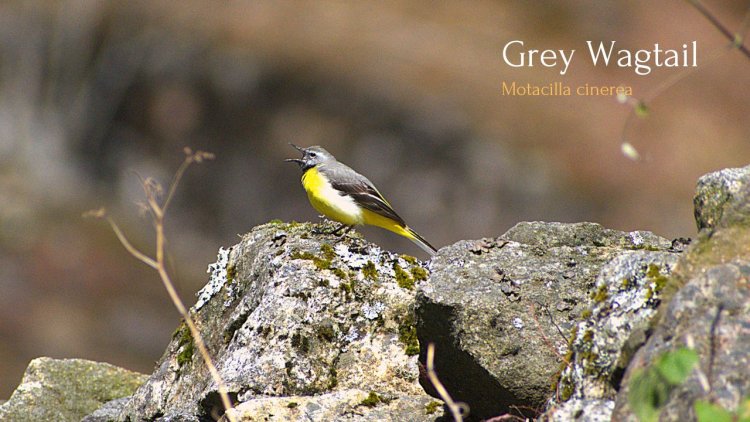
16.Grey Wagtail
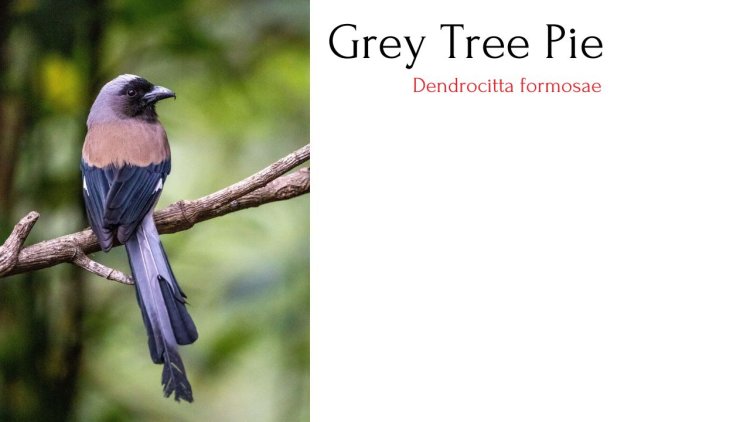
17. Grey Tree Pie
It is also known as the Himalayan treepie, is an Asian treepie, a medium-sized and long-tailed member of the crow family. The species was first described by Robert Swinhoe in 1863. They are widely distributed along the foothills of the Himalayas in the Indian Subcontinent and extending into Indochina, southern mainland China and Taiwan. The populations vary in plumage and several are named as subspecies.
18. Khalij Pheasant
The bird is often described as a "striking" or "elusive" species, and its habitat and appearance are commonly noted in birdwatching contexts. It's primarily known for its glossy, iridescent plumage, bare red facial skin, and distinctive black-and-white tail feathers.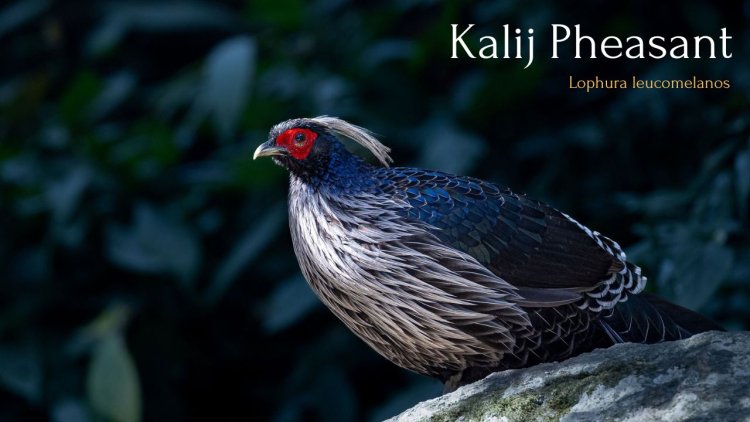
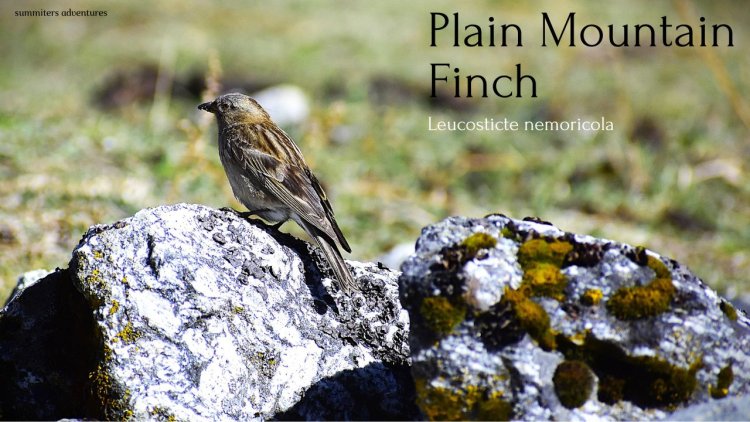
19. Plain Mountain Finch
It is a species of finch in the family Fringillidae. It is found in Afghanistan, Bhutan, China, India, Kazakhstan, Myanmar, Nepal, Pakistan, Russia, Tajikistan, Tibet, and Turkmenistan. Its natural habitat is temperate grassland and upland forest. It is a resident breeder across the Himalayas. Medium-sized to large, slender, brownish finch with pointed bill, long wings and notched tail. Mantle boldly streaked with pale 'braces'. Unstreaked grey rump contrasts with mantle / back, and has prominent white tips to uppertail-coverts.
Juvenile is a warmer rufous-buff on head, mantle and underparts. Common resident and altitudinal migrant in all the higher areas of Gilgit-Baltistan. Found in mountains, hillsides and alpine meadows up to 4500m; descends to 2000 m in winter to terraced fields, open forested slopes and cultivations. Forages on open ground, in grassy areas among rocks or screes and, less frequently, in open woodland, where it perches in or on trees; often tame, and known to take household scraps around settlements. Feeds on mostly seeds of grasses and alpine herbs; occasionally small invertebrates.
I was fortunate to sight them in Na Village of Rolwaling Valley during Tashi Lapcha Trek
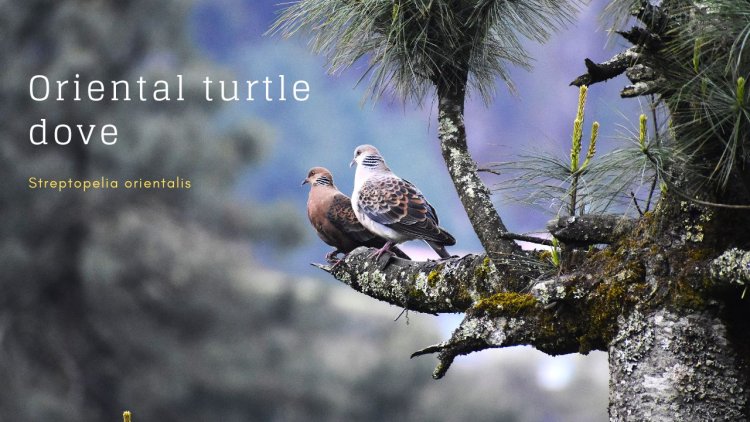
20. Oriental Turtle - Dove
It is a graceful and often overlooked species found throughout the temperate zones of Asia. In the Himalayas it can sighted upto 4000 m & Rolwaling and Khumbu Valley of Nepal, this dove species is most commonly seen in the mixed forests and wooded valleys of the lower to mid-altitude regions, where it forages on the ground and perches quietly in the canopy.A pair caressing each other looked pretty in Phakding on Everest ( EBC Trek ) Trail
This dove is slightly larger and darker than the more familiar Eurasian collared dove. It is easily recognized by its rufous-brown plumage, black-and-white striped patches on the neck, and scaled feathering on the wings. The Oriental turtle dove has a soft, rolling call and often feeds on seeds, grains, and berries found on the forest floor.
21. Fulvous Breasted Woodpecker
It is a medium-sized Woodpecker with stained yellowish-brown underparts. It has a white barring on back and thin stripes down the neck and chest. Undertail red, breast and belly buff with light flank barring and slight side streaking. Whitish cheeks partly bordered by black line. The Male has an all-red crown, female an all-black one.
Two subspecies are recognized. Race Westermani found in North Pakistan (Margalla Hills), North West India (Himachal Pradesh) and Western Nepal has longer bill, wing and tail than nominate, slightly darker throat contrasting less with breast.
Distinguished from Brown-Fronted Woodpecker by much longer bill, fully red crown, darker underparts with less heavy streaking; from Stripe-Breasted Woodpecker by slightly smaller size, less heavy streaking below, whiter-faced and has more extensive and better-defined stripes on the underparts.
The Fulvous-Breasted Woodpecker range that extends from the Western Himalayas and the Eastern Ghats and is found in Bangladesh, Bhutan, Nepal, India and Myanmar. Its natural habitats are subtropical or tropical dry forest, subtropical or tropical moist lowland forest, and subtropical or tropical moist montane forest. Found mostly in open, damp mixed forest in lowlands and uplands, preferring open forest, edge, secondary growth, open country with scattered trees, plantations and gardens; found also in bamboo stands, and along dry riverbeds. In the Himalayas, occurs in tall deciduous stands, especially mixed Bombax–Ficus woods. Found from Sea-level to mountains, in Himalayas to 2800 mtrs.
It feeds on ants, a variety of other insects, larvae, small scorpions, berries and fruits. It stays singly or in pairs, or in family parties, also in mixed-species flocks. It favours tall trees, including isolated ones in open areas near forest. It forages on trunks and larger branches, also well up under the crown and among crown foliage Feeding techniques include gleaning, probing and strong pecs and hammering; also prises prey of the bark.
The Call is an abrupt “skik” or “tchick”, sharper than that of The Grey-Capped Pygmy Woodpecker, higher and clearer than that of Stripe-Breasted Woodpecker, a growling “kik-i-derr” occasionally given. Drums in weak, short rolls, each roll accelerating a little before dying, roll duration 1 to 2 seconds.
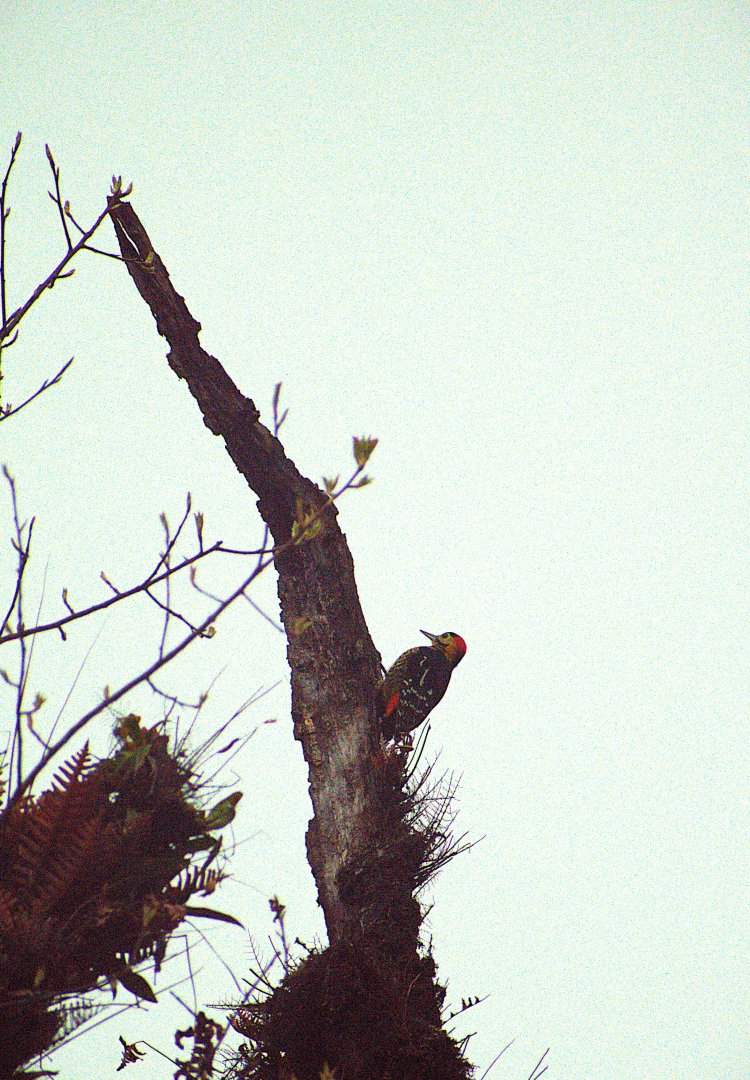
22. Yellow Billed Magpie
The Yellow-billed Blue Magpie is a striking, long-tailed bird from the crow family, known for its vibrant blue plumage, yellow beak, and white wing patches, inhabiting the Himalayas and parts of Southeast Asia. These intelligent and social birds are often seen in noisy flocks, foraging for insects, fruits, and small animals in forests and villages, and are recognized by their loud, varied calls.
23. White Winged Grossbeak
It is a species of finch in the family Fringillidae
It is found in Afghanistan, Bhutan, China, India, Iran, Myanmar, Nepal, Pakistan, Russia, Tajikistan, Turkmenistan, and Uzbekistan. Its natural habitat is boreal forests.
I was fortunate to stop after hearing a continuous calls from pine bushes, enroute to Namche Bazaar
The Mycerobas grosbeaks are a genus of finch in the family Fringillidae. They are colorful and are at 20–23 cm the largest species in the family. They are found in the southern Himalayas and across into China. The genus contains four species.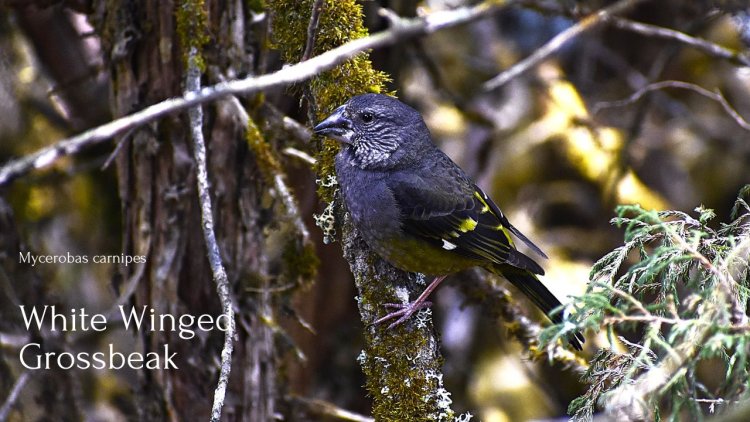
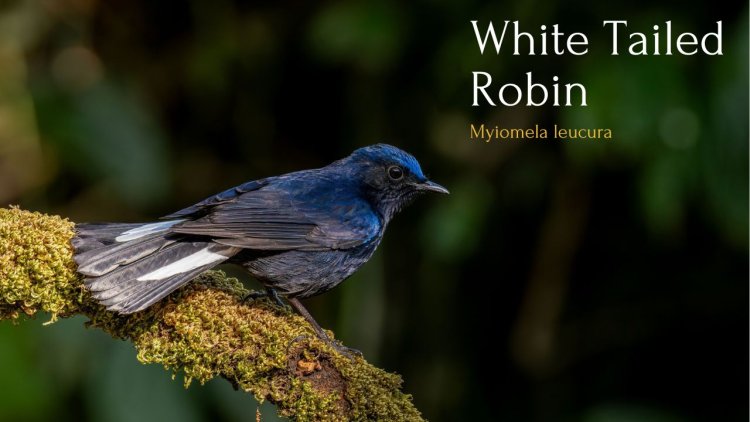
24. White tailed Robin
Stately ground-dwelling songbird of dense mid- to upper-elevation broadleaf and mixed forests, particularly in areas with bamboo. Male a striking rich blue with brighter patches on crown and wings, female brown overall with white throat and belly. Both sexes have large white patches on sides of tail that flash brightly in the gloom of the forest when fanned.
Normally Breeds in Himalayas at 1200 to 2700 mtrs, wintering from foothills to 1500 mtrs.
The diet of the White Tailed Robin is generally insects and berries. Forages on ground and in low undergrowth; sometimes in bushes and trees, and more arboreal. It is very secretive and appears blackish in its shady habitat, except for the white in the tail, which it constantly opens and shuts.
The Song is beautiful, a short series of ringing silvery whistles, a series of short, deeper and flutier well-spaced phrases consisting of thin silvery liquid quavering warble of 7 to 8 notes usually rising. “tey-tlee-i-ta-wey-i”. Calls include thin 1 to 2-note whistles and low “tuc”. Most common call is a high thin “tzin.”
25. Whistlers Warbler
Whistler's Warbler was the most common "golden-spectacled warbler" during my trip to Arunachal Pradesh, Singalila National Park. They were often seen joining mixed-species flocks along with other small insectivorous birds. I also came across several individuals that were already singing their sweet warbling songs. It was very difficult to photograph them as they were moving fast in the bushes.It was enroute to Phakding on Everest Base Camp traili was able to finally capture a image a it ! 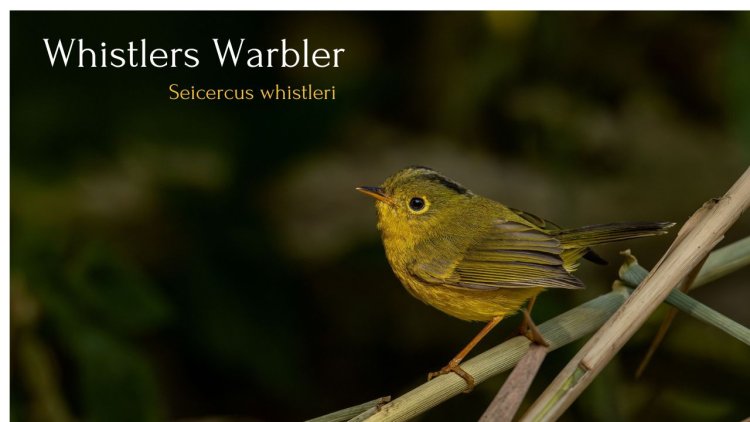
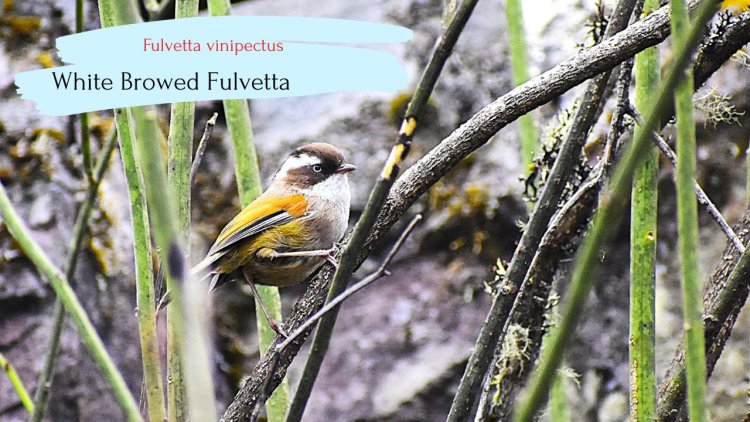
26. White Browed Fulvetta
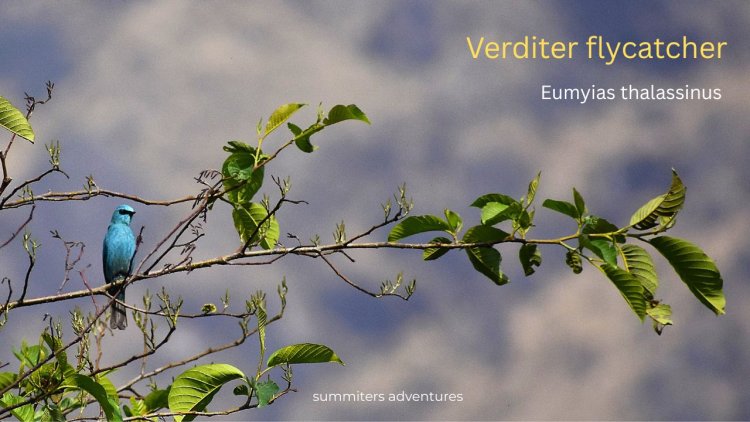
27. Veriditer Flycatcher
It is a small flash of sky-blue perched quietly among forest branches. Its soft turquoise plumage seems to glitter in the shade, giving it an almost ethereal presence against the green backdrop.
From an exposed perch, it darts out swiftly to snatch insects midair, then returns with effortless grace. Its gentle, thin calls blend softly with the sounds of the forest, never overpowering, always calming.
Delicate, serene, and beautifully poised, the Verditer Flycatcher feels like a breath of fresh air—light, peaceful, and unforgettable.
28.Snow Pigeon
A species of bird in the genus Columba in the family Columbidae from hilly regions of central Asia. Often seen swirling around rock faces and cliffs in high mountain passes, this highland pigeon usually occurs in pairs or medium-sized flocks. Unlike any other pigeon, with a dark gray head, white neck and underparts, and gray wings with broad brown bars towards the tip. Occasionally visits villages and fields, but skittish and generally less approachable than Hill Pigeon and Rock Pigeon.
We sighted a flock at Na village foraging on grassy patch during Tashi Lapcha Trek in Rolwaling valley.
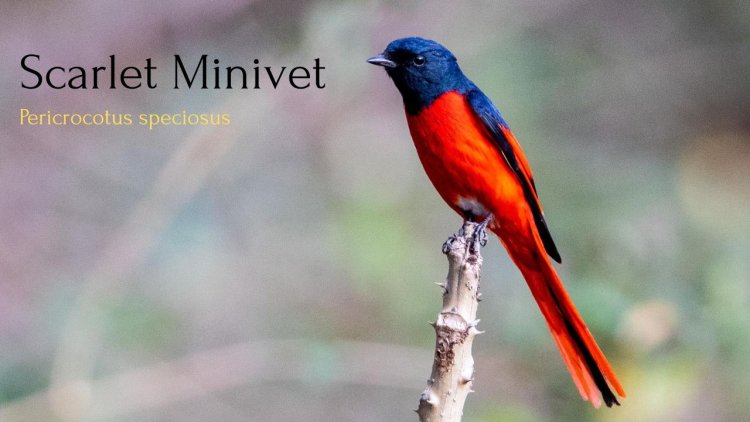
29. Scarlet Minivet
The Scarlet Minivet from the Himalayas is a small bright passerine with long wings and a short beak. It makes small groups that forage together to catch insects from the tree canopies.Their cup-shaped nests are woven together with spider webs!
The male has black upperparts and head, and scarlet underparts, tail edges, rump and wing patches. The shape and colour of the wing patches and the shade or orange in the male varies across populations.
Brilliantly-colored forest bird, typically encountered in flocks. Coloration varies significantly throughout wide distribution, with males ranging from black-and-crimson
Gives high whistled “wheeep” notes, often when flying over the treetops.
30. Rufous bellied Niltava
This vibrant little songbird is a true gem of the Himalayan forests and parts of Southeast Asia. The males stand out with their brilliant blue plumage and rich rufous underparts, while the females wear softer browns touched with blue.
Agile and quick, they dart through dense, shaded forests, snapping up insects mid-flight or from hidden perches. With their vivid colours and melodic calls, they’re a delight for anyone lucky enough to catch a glimpse.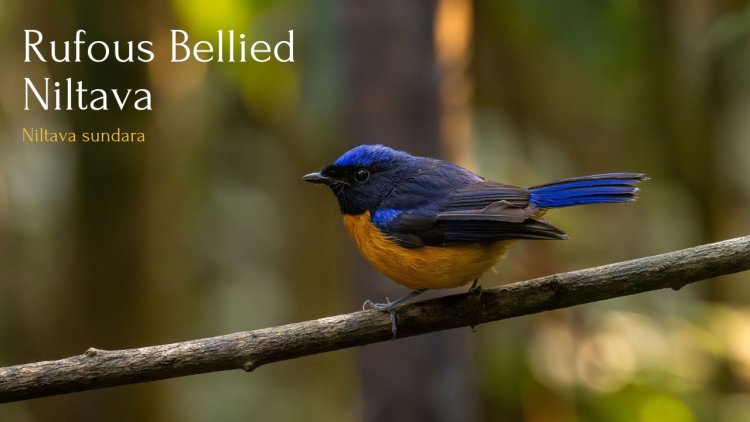
If you visiting Rolwaling valley or Khumbu Valley for any of the Great Himalyan Trails or Popular Everest Bse Camp Trek then you heed to the sound of nature. Indulge in bird watching.The bird life around will soothe your innersoul with song of earth and make your visit more memorable in the lap of nature...

 Vishwanath Radhakrishna