Mount Saramati - A Immersive Journey
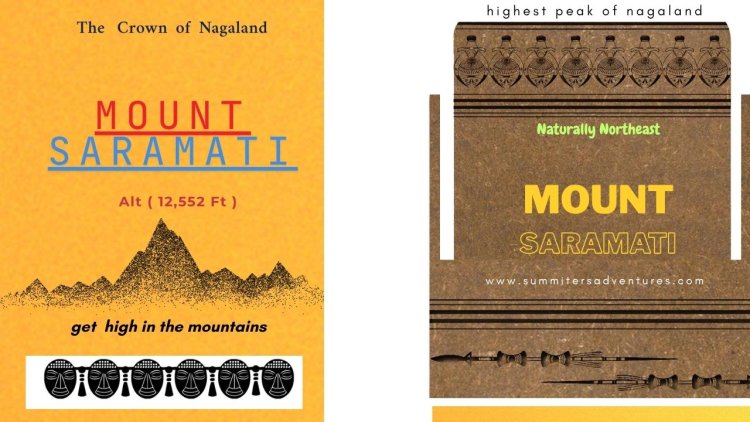
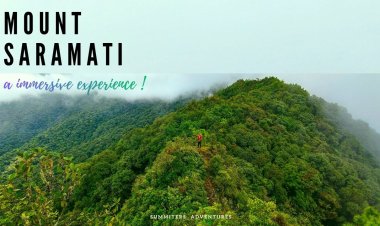
The Himalayas are a magnificent and awe-inspiring mountain range that commands deep respect, devotion , serving as both a physical marvel and a profound spiritual sanctuary.Similarly the snow clad peaks in Purvanchal have their reverence.Among them Mount Saramati located in Burma border is the highest peak of Nagaland reaching a elevation of 3840 M is a bio diversity hotspot It is relatively unexplored due to its remoteness !.Here is a awe inspiring journey to the incredible summit in naga hills !
 Vishwanath Radhakrishna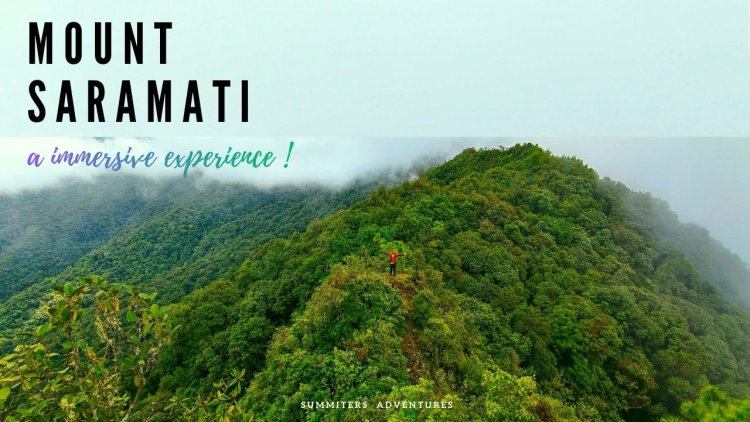
If I say so myself wholeheartedly that i have surrendered to the Lord of Mountains - ' HIMALAYAS ' it is not just because of a Infatuation ; but because of its sheer Natural Grandeur, Deep spiritual significance and Vital life giving resources to all living beings on earth !
In their shadow i find mothers love
Inspiration - Strength - Solace
Eversince i have heard about Mount Saramati Altitude ( 12,552 feet ) - highest peak in Nagaland, Known as Crown of Naga Hills in the Purvanchal Range.
A part of Great Hiamlayan range.As a nature lover I was fascinated by its sheer bio diversity and riveting landscape !
An Ode to Mount Saramati
High where the blue and border meet,
And clouds bow down at stony feet,
The crown of Nagaland ascends,
Where earth with ancient heaven blends.O Saramati, silent, grand,
Guarding the wild and warrior land,
Your snow-capped crest in winter gleams,
A sentinel of waking dreams.From Thanamir's sweet apple vale,
Up through the pine and misty trail,
Your silent ridges rise so high,
To touch the sapphire eastern sky.Being part of the mung mung harvest festival, I was grateful to the hospitality of the Sangtam tribe, where we enjoyed the Naga meal and Rosella tea served with love. After a tour of Phelungre in the Kiphire district of Nagaland.
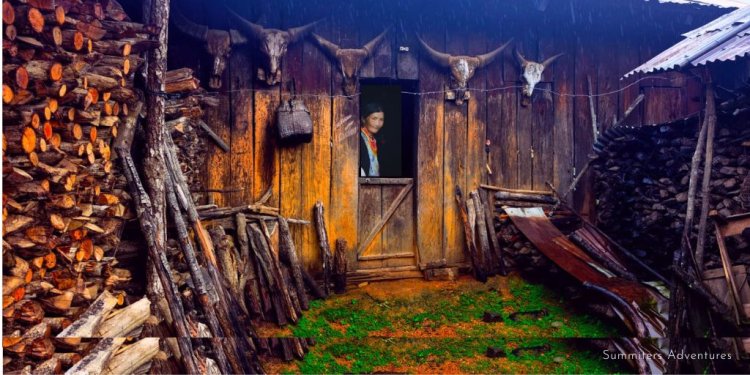
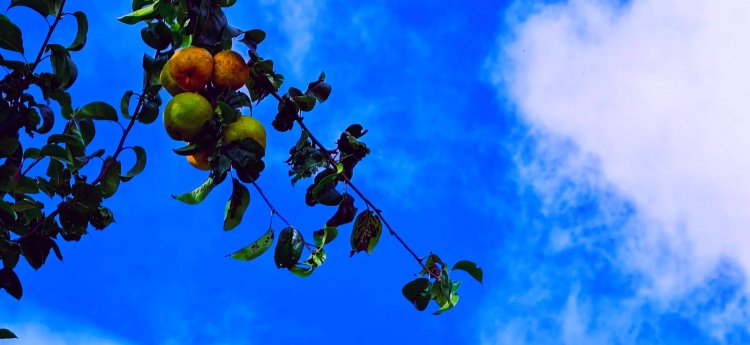
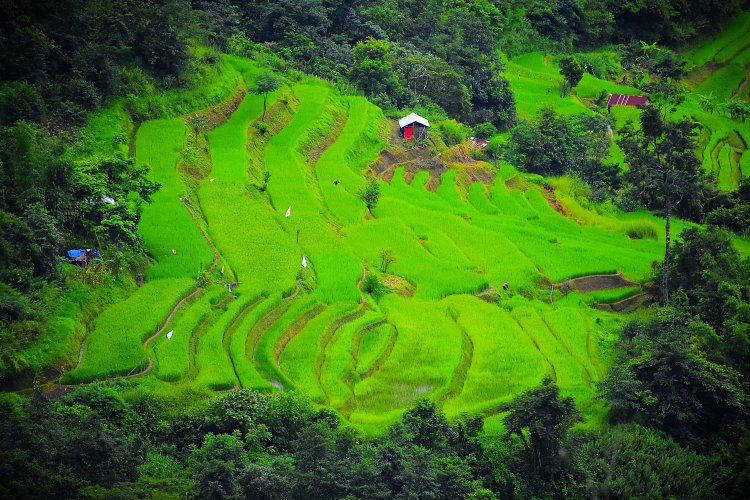
A rickety jeep transported us to Thanamir village known as the Apple Capital of Northeast, in the evening a sleeping hamlet, after passing through hamlets of Pungro - Meluri villages. Thanamir is last village of Nagaland situated in the high mountains at the elevation of 2060 m.Inspite of savouring the Apples, Coco persimmon, Kiwi and sweet PIne Apples. we were greeted by the spellbinding views of blue hills , rivervalleys and farm lands.
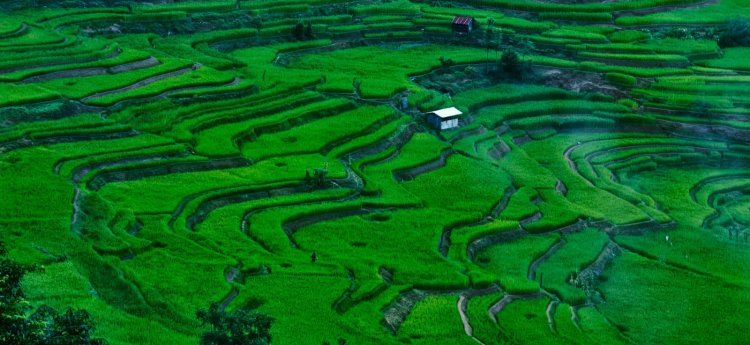
The never ending journey through hills, slushy roads and roaring sound of rivers echoed in the ears. The perenniel rivers Züngki River and the Tizu River, along with minor tributaries like the Likhimro River were for company duirng the journey. The farming method followed by the naga people also known terrace farming locally known as pani-kheti (wet terrace paddy farming), corn fields, including Rajma and sweet potato is an ancient and sustainable agricultural practice used across the steep slopes of the Naga Hills
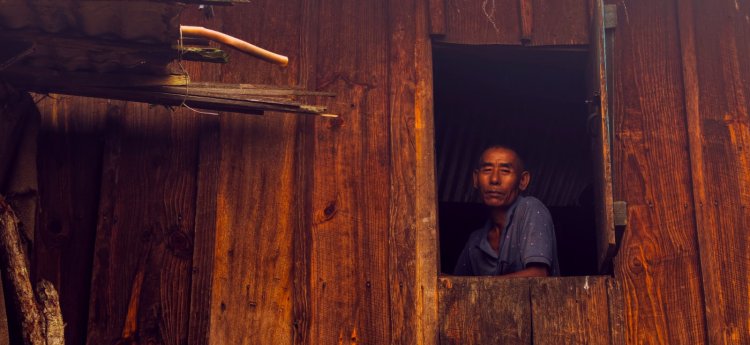
We were at thanamir village by evening after a long journey.The himchunger naga tribe were eager to receive us with a cup of hot tea and were host for next few days.The Yimkhiung community lives in this village consisting of some 150 households
Mount Saramati seemed to be shy and was draped in veil of mist.The local folk were busy in preparing for a event.We passed through the Apple, Pear and Plum orchards.The sun was making furious attempts to relieve from clouds.The golden tinge has emerged.I thought that we can witness a fabulous sunset evening in the horizon.I could sight few and listen to the orchestra of babblers, Brown shrike and Veriditor Flycatchers !
The community owns about 65 Km sq. of the adjacent forests till the border of Myanmar - Now known as Burma. This forest mostly consists of dense oak, Pine , Rhododendron ( Buransh ) ridge tops, and other mixed forests at Mount Saramati (highest peak of Nagaland at 3811 m) contiguous with Fakim Wildlife Sanctuary. Jhum – Jhum or Jhoom farming is the name given to slash and burn agriculture by local communities in northeastern regions in India.
Most of the Yimkhiung community members are farmers and practice jhum cultivation on the hills around the village. The crop includes apples, plums, potatoes, Rajma , colocasia, corn, and rice. Apart from farming, the community who were traditional hunters, still depend on the forest for wood and meat.The long journey made us tired and after a quick meal we retired for the day at Guest house.The starry sky promised us of good weather.The night was cold and stay was cosy with basic facilities.
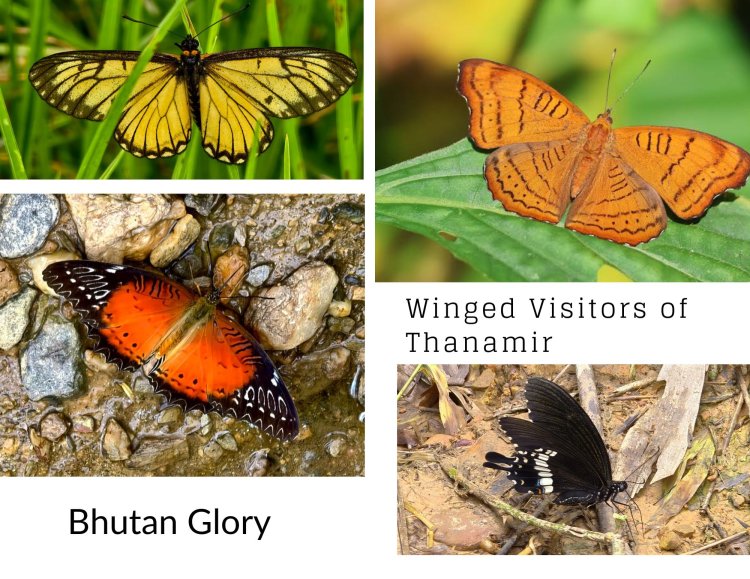
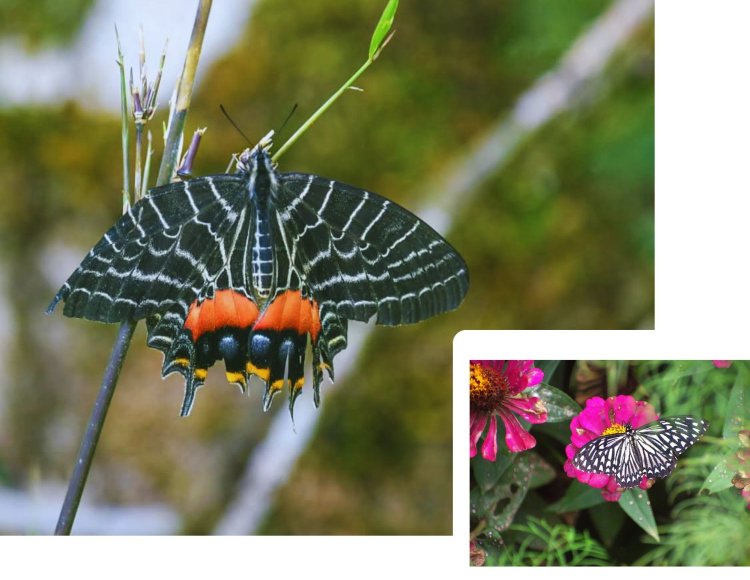
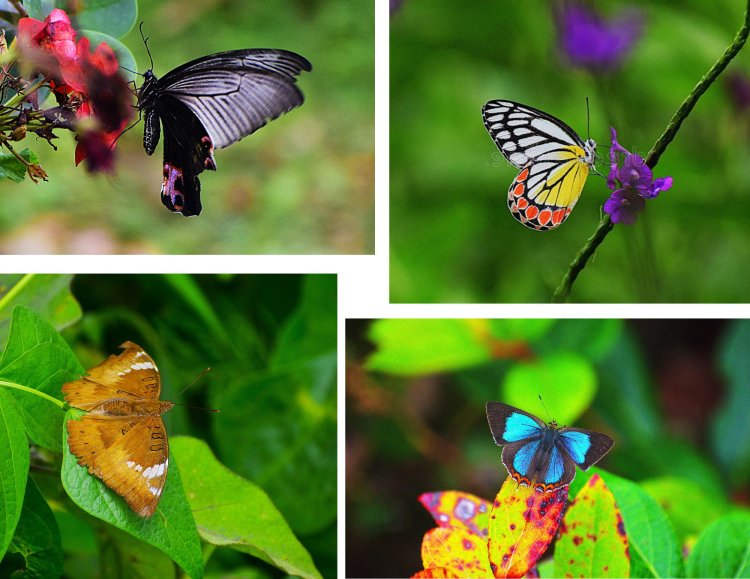
Next morning mete, Puno accompanied by a team another 6 members we started by 6:30 am to reach Base Camp. We armed with pack lunch walked towards eastern direction. After crossing the helipad we gained entry into forest with due permits. It was bright as usual and my lens was looking for colourful butterflies dotting the landscape - Yellow Coaster , I could see Bhutan Glory in the air soaring like a model aircrat made by wright brothers , Indian Jezbel - The State butterfly of Nagaland,Common Rose, Sapphire Butterfly,and Common Baron.
I could sight few Moths lazing in the sun uniterrupted. The uphill path in the fringes of forest was slippery due to dampness, Walking on the bark of fallen trees was slippery.It was a baalcing act.I was surprised of not encountering leeches which see come across in Western Ghats.Snakes of Saramati Range Though i knew about the Vipers here, I did not get a chance to see any as were walking in the evergreen forest in the monsoon season I remembered of sighting the Malabar Pit viper in Talle Valley , Jerdons Pit viper, Assam Snail Eater Bella Rat Sanke, Green Rat Snake and Blyths Reticulated Snake are few commonly encountered snakes here. I could spot a variety of wild flowers in bloom.
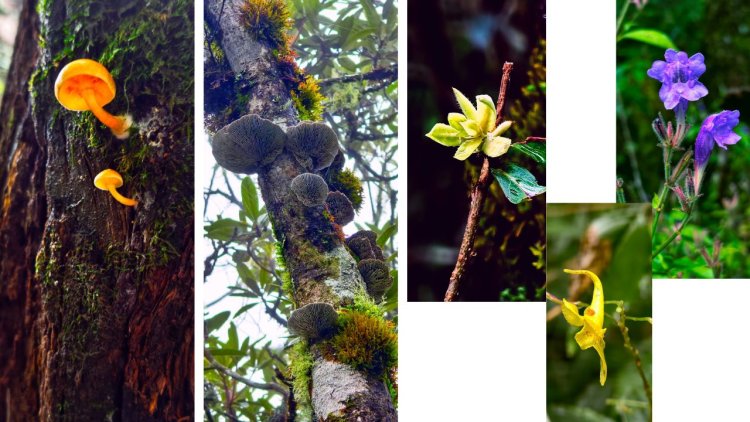
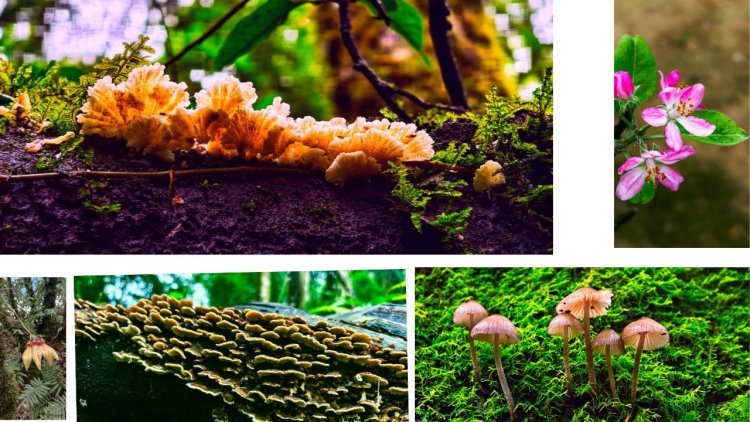
The whole forest was velvet green with lichen, brooming with Mushrooms of variety size shapes and colours.
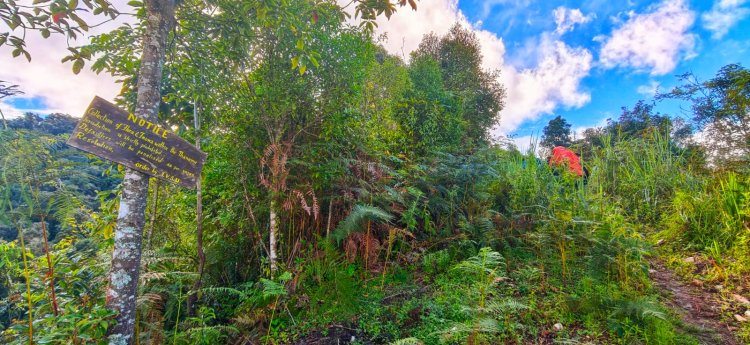
I had seen a few similar mushrooms during my 7 lakes trek in Anini.Our guide Puno collected few orange mushroom and mentioned that they are edible !.We passed through the resting huts located in the midst of the forest.The descents were bit tiring and more of less to be done cautiously with extreme care.The narrow path and wet land need to be taken into consideration.In the meanwhile a proper shoes with proper sole is of high priority.At some places during the forest walk, the canopy was so thick that we experienced pitch during during day time and visibity zero !.
The big rock after 3rd resting point is a mere challenge with 80 degree gradient climb with the support of wire and ropes.However one need to climb with balance and support as their is no anchor or any belay for safety.
All members descended with utmost safely. A sense of satisfaction for everyone. The whole route to Mount Saramati is rather different and takes more of an elevational forest shift. The species of oak on the route to Mount Saramati changes with elevation. The ridge tops are covered with blueberry bushes interspersed with Rhododendron and very few pines. The forests get less dense and at places host bamboo patches. As we move closer to the peak we see a transition from dwarf pine and blueberry on rocky faces to tall rhododendron forest just before the tree line ends. From the peak, the India - Myanmar border can be seen which is formed by a long ridge that divides the two countries.Mount Saramati had a very different set of birds due to the change in elevation
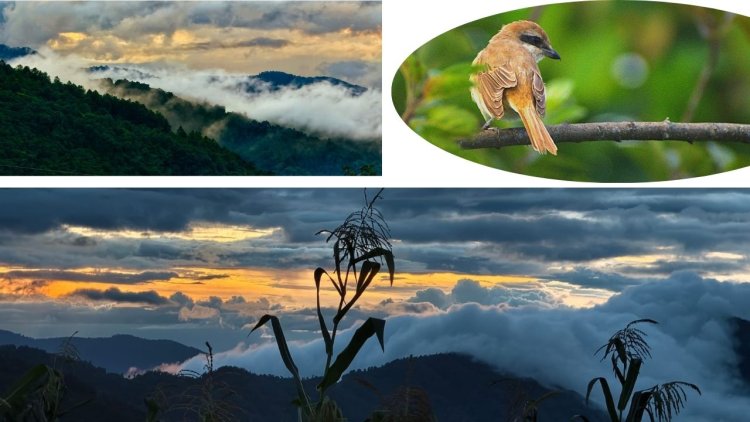
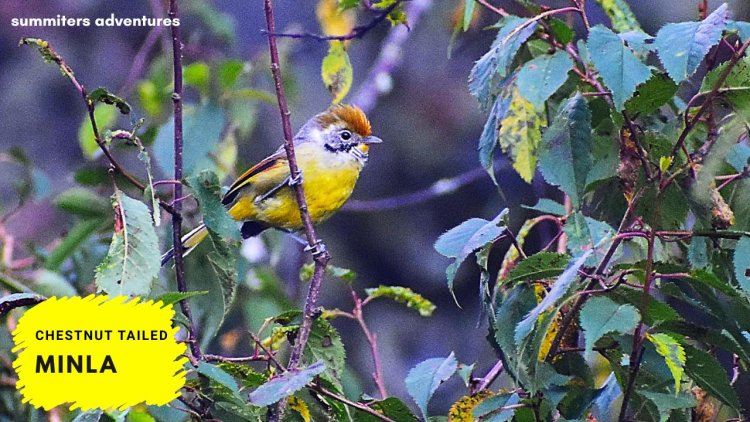
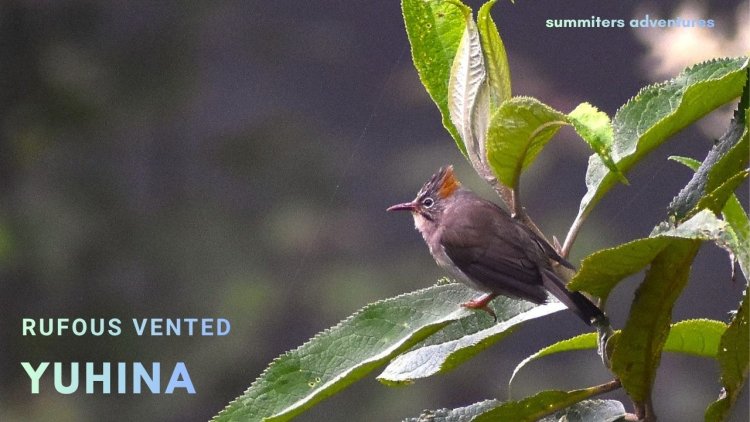
The birds either used to settle on high perches or in the dark bushes.Photographing them during the trek was bit time consuming.But patience did it happen finally.Few times i repented of not carrying my bigger lens.
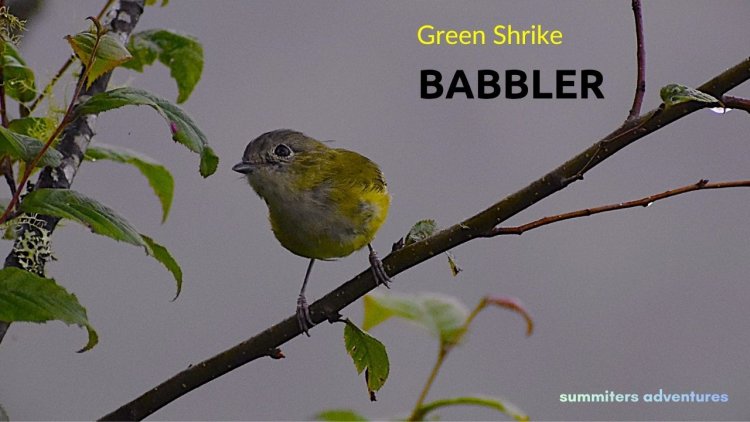
By the time we reached the tiger hill, it was around 5:30 pm.It was getting dark.The occassional rains made the trail slippery.Our guide Acaso walked beside us.Their was no sight of hills, as it was draped in mist. I could spot a Pheasant, but suddenly disappered in the bushes.
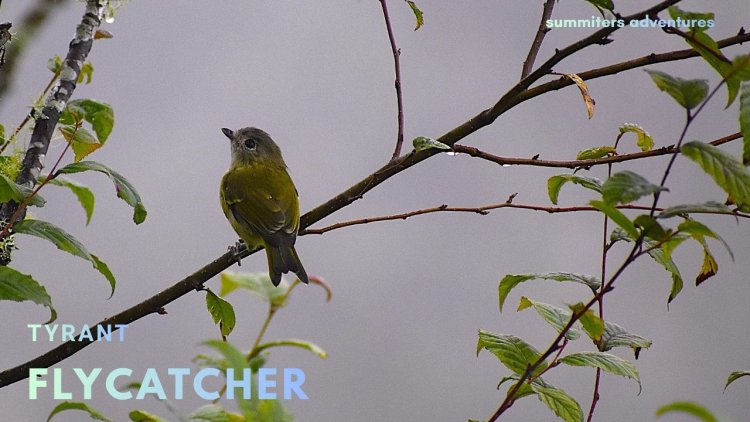
We reached the stream and quenched our thirst.It was one and only place to find water though we can hear the sound of rivulets in the deep jungle.Our guide pointed out at a hut in the distance and signalled the porters who had reached in advance.
A small sigh board mentioned that Base Camp was just 20 minutes.A sign of relief after walking for nearly 9 hours lingered in our mind.But, it took about 45 minutes in the drizzle.Finally we first team reached the Base by 7 pm.
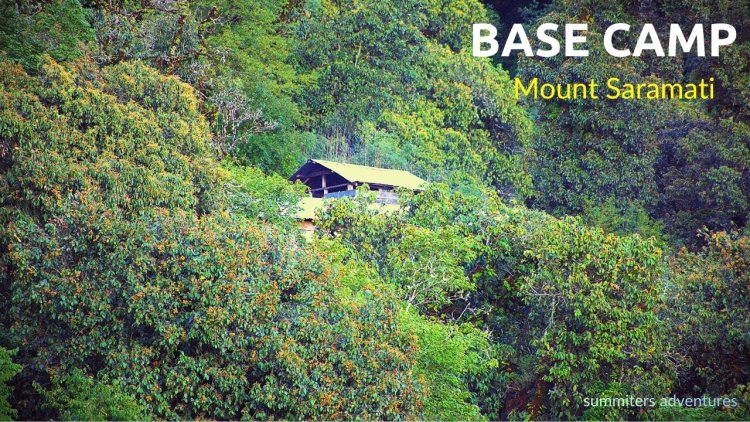
Other team members arrived after sometime and all were tired and drenched because of heavy rain.We were served hot dinner and retired as we had to move upward for Summit early morning.
To our dismay, it rained whole night till morning.Our guides Mete and Puno advised us not to go as the path ahead is a climb 80 deg and after rains the slopes would be slippery.We did not get into discussion and went with Mete's dicision, considering safety of group !
The rain continued next day too, for the whole day.It reminded the quote
“I believe that, with anything in life, if you have the patience, desire and passion, you can do whatever you set your mind to.”
―

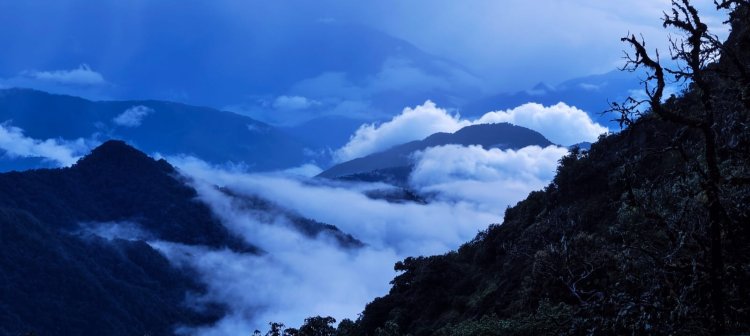
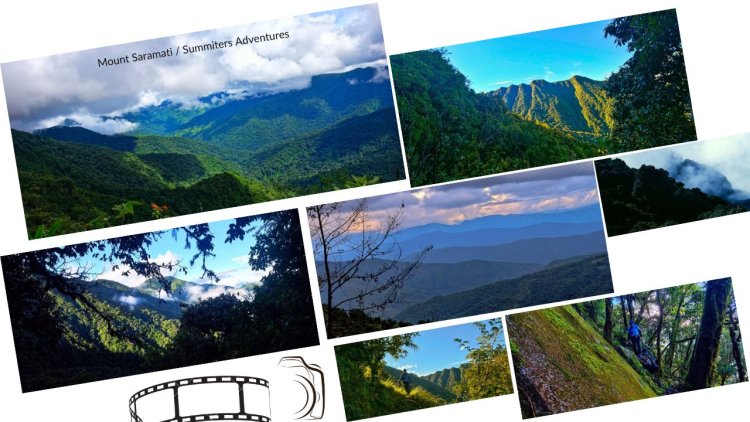
Though it rained in the return journey too the landscape looked different and surreeal.The whole valley engulfed with thick mist ! ". I gazed at the hills i walked through. I felt in the corner of the heart the quiet magic of the wild would stay with us for a lifetime."