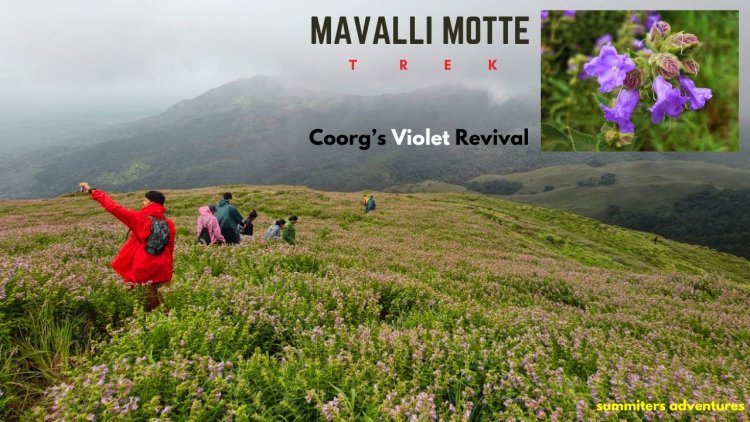
Mavalli Motte Trek - Coorgs Violet Revival
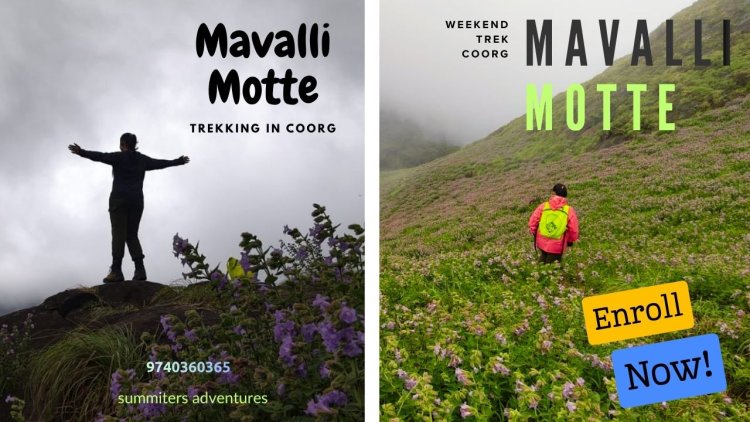
For the adventurous, coorg or Kodagu has array of activities to offer !.During monsoons the rolling hills, enveloped with mist beckon the nature enthusiasts to explore the hills and valleys.Mavalli motte is one such trek, which is been in limelight because of Neelakurinji blooms and panaramic views !. The trail is feast for nature lovers, which is dotted with swift streams, picturesque greenery and waterfalls.Thus making a FEAST for the ardent nature lover !
 Vishwanath Radhakrishna
The mesmerising landscape, raw forests, rolling green hills and mystical cascades has been always close to the heart for nature lovers visiting Coorg.The arrival of monsoon triggers the interests of adventure geeks to explore the wild environs.
If the mother nature beckons you with a special invite to witness the grandeur, known as the Pushkaram in Kaleidiosope of colors then its becomes irrestitable to stay indoors !
This year, during August I see the mass flowering in Kodagu region, which reportedly has the highest concentration of kurinji plants.
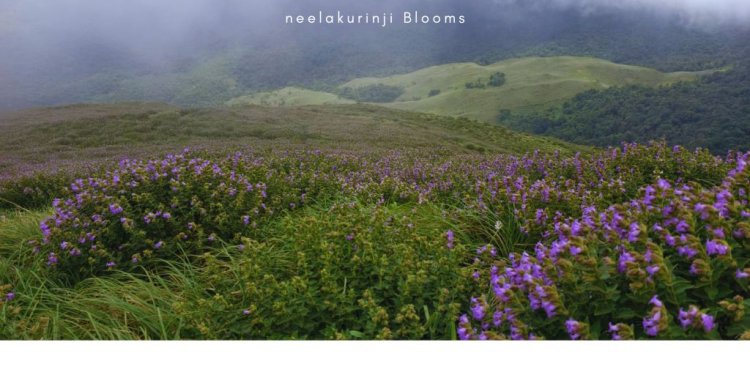
Every twelve years , the hills burst into a sea of violet , a rare natural spectacle for which travellers make a beeline for. An endless stretch of rolling hills carpeted with tiny violet flowers welcomes the visitors. It is the time Neelakurinji, a flower with 40 odd varieties, blossoms in all its grandeur.
Kurunji Flower
The Kurinji made its first appearance in poems, legend, and folklore thousands of years before 1858, when it was officially documented and classified as Strobilanthes kunthiana. British botanist Robert Wight who initially studied this plant, identified over 20 species at the time. Eventually, 250 species would be documented, each with peculiarities and a life cycle all its own
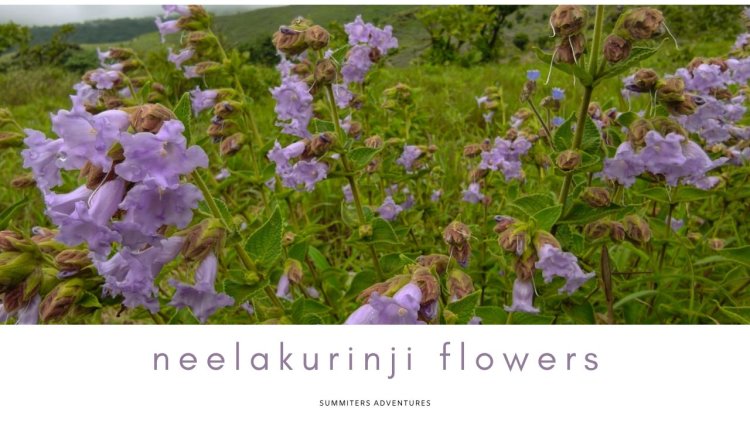
Inspite of delayed monsoon,on the slopes beside us, the kurinji bushes bloomed bright violet hesitantly sending out the first early flowers, then exuberantly in full bloom, even as a freak storm battered the hillside
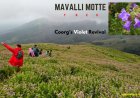
One August weekend , we drove about 12 Km away, on offroad, with a hike to see the mass flowering Kurinji Purkaram everyone was talking about.@ Mavalli Motte 4921 Ft in Coorg.
Out by the cliffs was a sea of iridescent blue, as spectacular as I had imagined it would be. Waves of kurinji flowers bent and swayed as a gentle breeze rustled about the grassland. A constant buzz reminded us that the bees were hard at work, collecting the rare kurinji-then.
I imagined William Wordsworth compiling a poem as he spotted a cloud of violet kurinji, as enchanting as his beloved daffodils, “Across the grasslands, beyond the shola trees, fluttering and dancing in tune to the breeze…”
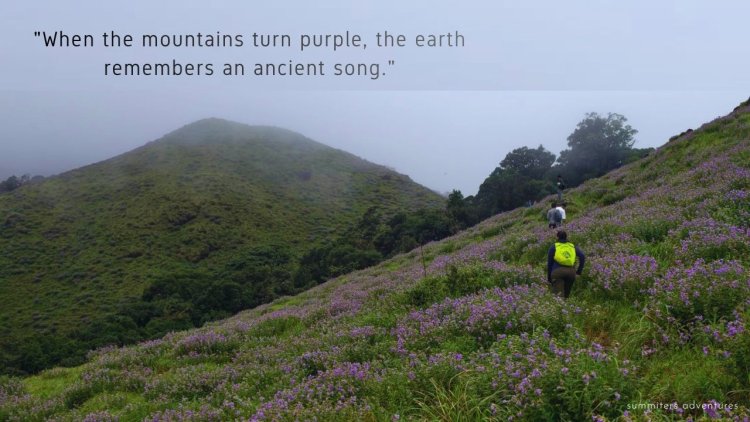
Alongside our walking path was a steep hillside covered with kurinji shrubs, just turning dark violet. I counted no more than thirty shrubs that typically grow in shola grasslands but seemed to be thriving in this rocky terrain, sprouting in crevices between rocks and grassy patches with little soil.I could hear to the sound of the active rivulet. I quenched my thirst in the natural stream !
I could see the Manjamotte Makaatmotte in the yonder, rising along the slopes.I heard that Kurinji too is in bloom and dotting the slopes.
The Impatiens plants clung to the mountainside, their stunted appearance mimicking shola trees. I walked over to examine the bell-shaped flowers, noting the violet-blue shades of the petals and the tinted buds waiting to unfurl. The plant is shorter than the grassland shrub, with reddish branches and large, coarse leaves. The flowers grow in clusters in a linear pattern, each flower an individual bell coated with fine hair – it has no fragrance; it is the sheer beauty of this mass flowering and the distinctive blue that attracts the bees, butterflies and birds that swoop down to drink the honey nectar.
Bees and butterflies are attracted to certain hues and this serves a crucial biological function in the plant’s reproduction. Every 12 years, I imagined we would wake up and walk over in the dales to witness this sight, a cliff painted in azure hues.
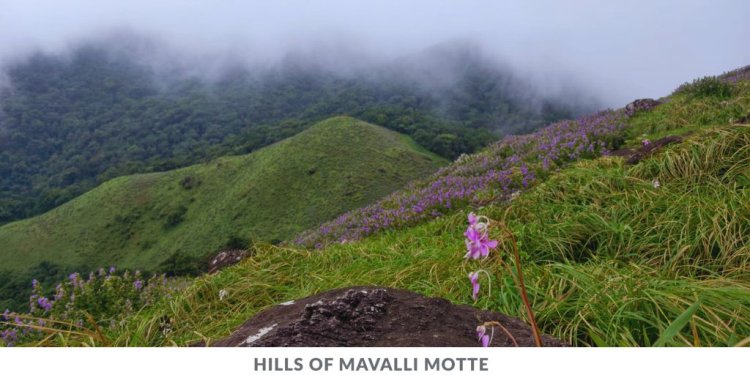
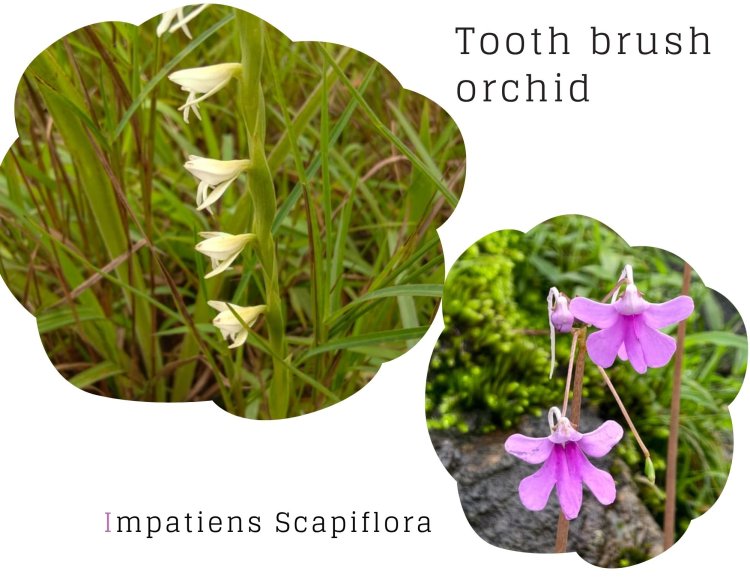
 I could see a solitary stick like flower, white in colour swaying in the grassland. As i neared, the flower in full bloom it greeted me. Every blade of grass was green. It was none other than Tooth brush Orchid !
Dendrobium secundum, also known as the toothbrush orchid, is a species of flowering plant in the genus Dendrobium of the family Orchidaceae.
A striking tropical epiphyte native to Southeast Asia, famous for its dense clusters of small, waxy flowers lined up neatly on one side of the stem, perfectly mimicking the bristles of a toothbrush
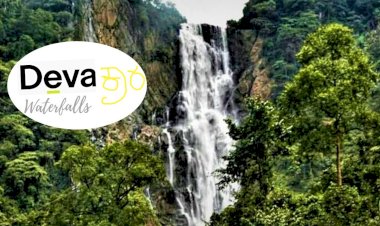
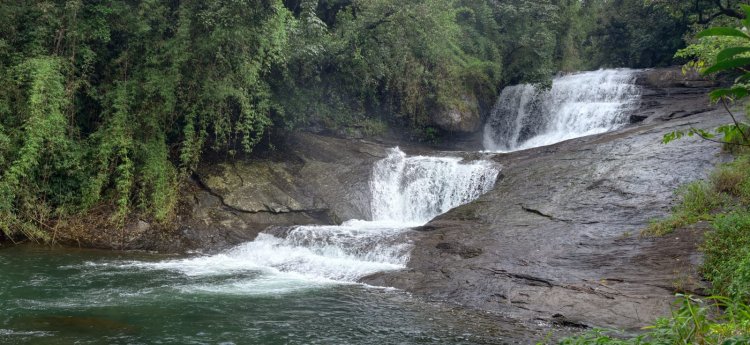
After the descent the path bifurcates to waterfall, from here a gradual descent through the rainforest and crossing a stream brings to 7 tiared waterfalls known as 7 Kere Deva Kund Waterfalls.The water cascading amidst the forest is a feast to eyes.After crossing the stone path one can witness the waterfalls in full glory.
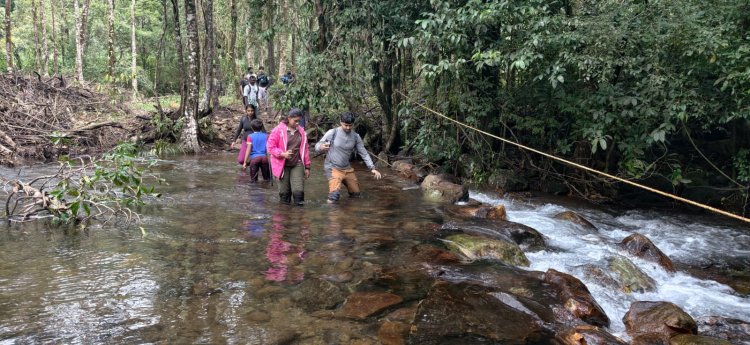
However 3 stages can only be seen from the rock surface, which acts like a vantage point.Visitors are not advised to get into water considering the strong water currents and slipper rocks.During rains the path leading to waterfalls will be slippery !
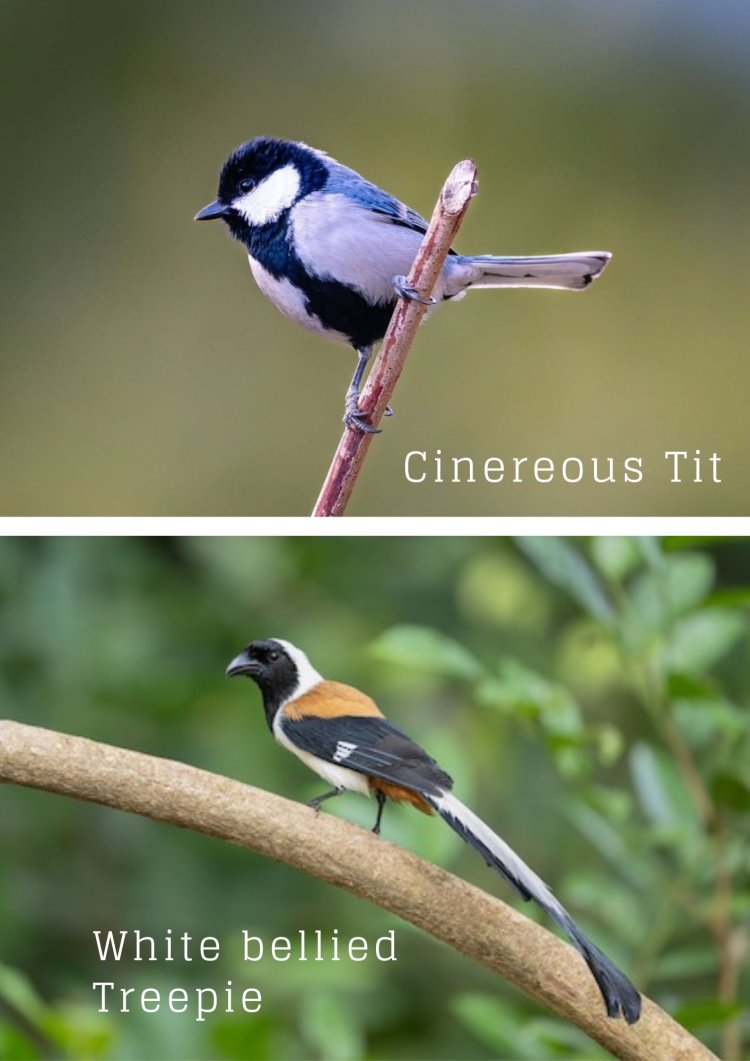
Though we were prepared to comat leeches, i didnot find many. The woods are home to innumerable bird species. I could hear to the call of Cinereous Tit from the bushes, White Bellied Tree Pie, Flame throated bulbul , Yellow browed bulbul and malabar Whistling thrush and Puff throated babbler
The sound of the wind and stream made us feel heavenly !.The distant hils and grass slopes with violet color was sight to behold. I felt i am BLESSED to witness the natures spectacle !
The Kurinji spends an entire lifetime flowering and fruiting in its natural habitat: the mist-shrouded grasslands of the Western Ghats, its only home on the planet. Any disturbance to this ecosystem has an adverse effect on the pollination cycle, which determines the long-awaited blooming season.
This endemic flower of the Southern mountains of western ghats - World Heritage site has now become an environmental mascot, representing a unique ecosystem that needs protection.
The Kurinji shares its home with a range of flora and fauna, some waiting to be discovered and others, endangered species already on the verge of extinction. The shola-rainforest-grassland, which acts like a sponge, retains water of monsoon rains and the shola forest are source of many rivers supplying water to the parched plains of South India.
The future of these hills is entwined with its indigenous flora and fauna: the Kurinji, the grasslands, moss and lichen, the wildlife , the butterflies and honey bees, every life form that contributes to this circle of life. The preservation of Kurinji is essentially the protection of an entire ecosystem.
Few things to remember and adhere to duirng the visit !
1.Maintain Silence and communicate in low voice
2.Stick to the trail and dont take random paths
3.Dont pluck flowers / Deface rocks
4.Rock faces will be slippery, mind your steps when walking on rocky outcrops
5.Dont play load music / Listen to the call of birds
7.Strictly Follow - Leave no trace policy. Dont litter.& Keep Hills Clean !
8.Dont get into waterfalls for swimming and is STRICTLY RESTRICTED.
If you intend to know about the Mavalli Motte Trek 4921 ft / Willing to explore, do let us know so that we can guide you.
Trek Distance - 10 Km
Grade - Moderate
Route - Offroad and Guided
Type - Offbeat
Write to us summitersadventures@gmail.com / whatsapp 9740360365 - @ Mavalli Motte
If you have already witnessed the bloom.Let us know about your experience in the comment section !